

Adequate Protein and Weight Loss – Why It Matters
Achieving sustainable Weight Loss is not just about eating less-it’s about eating right. Many individuals struggling with weight gain or obesity focus only on cutting calories, often ignoring the role of protein. However, adequate protein intake is one of the most powerful, science-backed tools to support healthy and long-term Weight Loss.
If you are planning to start your Weight loss Journey, understanding the importance of protein can make a measurable difference in your results.
Why Protein Is Essential for Weight Loss
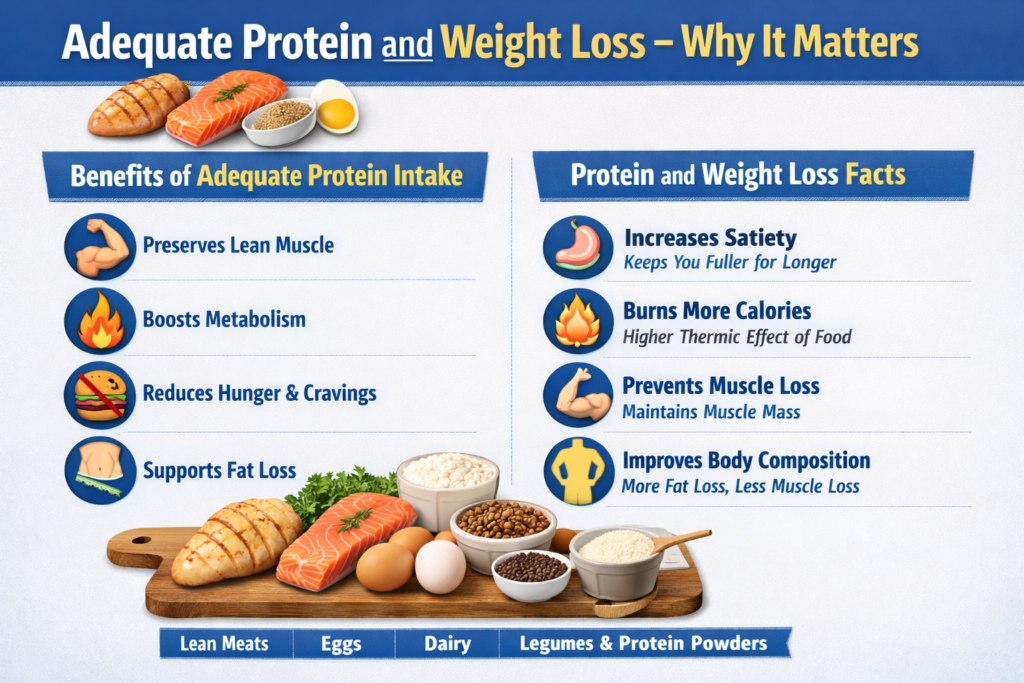
Protein plays a unique role in metabolism and body composition. Unlike carbohydrates and fats, protein has a higher thermic effect of food (TEF). This means your body burns more calories digesting and metabolizing protein compared to other nutrients. Studies show that about 20-30% of protein calories are used during digestion, compared to 5-10% for carbohydrates and 0-3% for fats.
For individuals aiming for Weight Loss, this increased calorie expenditure supports better metabolic efficiency.
Protein Increases Satiety and Controls Hunger
One of the biggest challenges in Weight Loss is managing hunger and cravings. Protein increases the release of satiety hormones such as GLP-1 and peptide YY while reducing the hunger hormone ghrelin. This hormonal effect helps you feel fuller for longer periods.
When meals are protein-rich:
- You naturally reduce overall calorie intake
- Late-night cravings decrease
- Emotional or binge eating tendencies improve
This makes adequate protein intake especially important for people struggling with obesity or repeated weight regain.
Preserves Lean Muscle During Weight Loss
When you lose weight without enough protein, your body may break down muscle along with fat. Loss of muscle slows down metabolism, making Weight Loss harder to maintain in the long term.
Adequate protein:
- Preserves lean muscle mass
- Supports strength and physical activity
- Maintains resting metabolic rate
This is particularly important for individuals over 30, as muscle mass naturally declines with age.
Protein and Fat Loss: A Better Body Composition
Healthy Weight Loss should focus on reducing fat, not just lowering numbers on the scale. High-protein diets have been shown to improve body composition by increasing fat loss while maintaining muscle mass.
Better body composition leads to:
- Improved insulin sensitivity
- Reduced risk of type 2 diabetes
- Lower abdominal fat
- Better cardiovascular health
For those dealing with obesity, focusing on fat reduction rather than crash dieting is essential for long-term success.
Important Medical Considerations
While adequate protein intake supports healthy and sustainable Weight Loss, it is important to understand that high-protein diets may not be suitable for everyone.
High protein diets may not be appropriate for individuals with:
Chronic kidney disease
Certain liver conditions
In these cases, excessive protein intake may place additional strain on organ function. Anyone with pre-existing medical conditions should consult a qualified healthcare professional before significantly increasing protein consumption.
A personalized and medically supervised nutrition plan ensures that your Weight Loss strategy is both safe and effective. Individual requirements vary based on age, activity level, metabolic health, and underlying medical conditions.
How Much Protein Is Enough?
For general health, adults need around 0.8 grams of protein per kilogram of body weight. However, for effective Weight Loss, many experts recommend 1.2-1.6 grams per kilogram of body weight per day.
Good protein sources include:
- Eggs
- Paneer and Greek yogurt
- Lentils and legumes
- Lean chicken and fish
- Tofu and soy products
- Nuts and seeds
Balanced meals combining protein with fiber-rich vegetables and healthy fats further enhance satiety and metabolic benefits.
Common Mistakes to Avoid
While increasing protein helps with Weight Loss, balance is key. Avoid:
- Extremely high-protein crash diets
- Ignoring fiber intake
- Skipping strength training
- Relying only on protein supplements
Sustainable results come from structured nutrition planning, physical activity, and lifestyle changes.
The Gut-Protein Connection
Emerging research highlights the role of gut health in Weight Loss. Protein quality and digestion impact the gut microbiome, which influences metabolism and fat storage. A well-planned protein-rich diet supports better digestion and nutrient absorption.
This is where expert guidance becomes valuable. If you are ready to Start your Weight loss Journey with Gutwell, a personalized, medically guided approach ensures you get adequate protein without compromising gut health.
Conclusion
Adequate protein intake is not a trend-it is a scientifically supported foundation for effective Weight Loss. It boosts metabolism, controls appetite, preserves muscle, and improves body composition. For individuals struggling with weight gain or obesity, prioritizing protein can transform results from temporary to sustainable.
Rather than focusing solely on calorie restriction, shift your attention to quality nutrition. With structured guidance, lifestyle support, and the right dietary balance, lasting Weight Loss becomes achievable.
Start your Weight loss Journey with Gutwell and take the first step toward a healthier, stronger, and more confident you.