
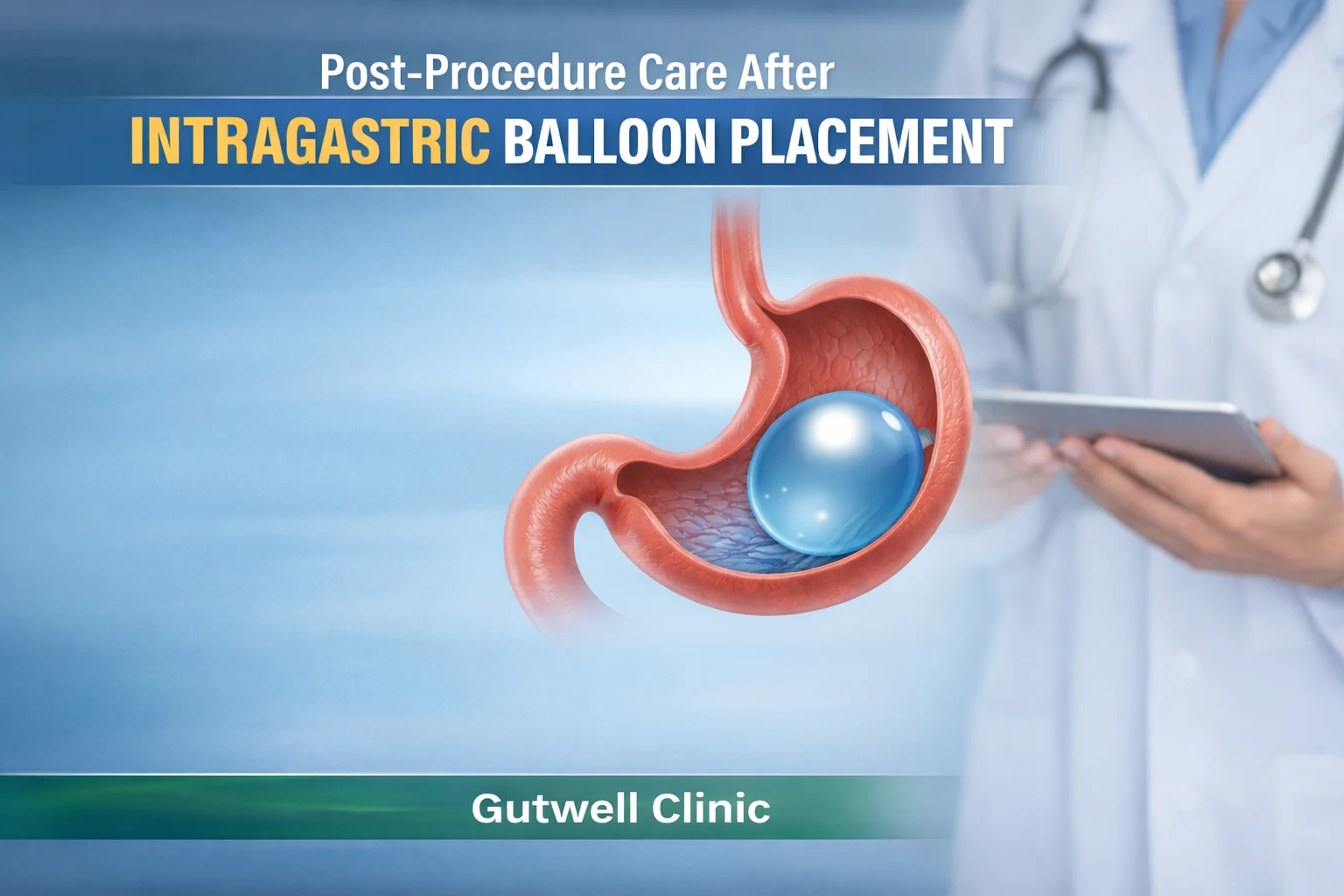
Instructions to follow after Intragastric Balloon Placement
An intragastric balloon placement (IGB) is a minimally invasive weight-loss procedure that helps reduce appetite by partially filling the stomach. After the procedure you will need to follow a clear plan of hydration, diet progression, medications and follow-up to maximise results and reduce side-effects. Below is a concise, easy-to-follow aftercare guide based on current clinical practice.
1. Immediate recovery (first 24-72 hours)
- Expect nausea, vomiting, abdominal discomfort and a feeling of fullness for the first few days – these are common as your stomach adjusts. Manage symptoms with prescribed anti-nausea and pain medications.
- You will usually begin with clear fluids only for the first 24-72 hours (sips only). Start with teaspoon sips and progress slowly; avoid straws and gulping.
2. Diet progression (typical staged plan)
Most programmes follow a staged approach:
- Day 0-3: Clear, calorie-free, non-carbonated liquids (small sips).
- Day 4-14: Soft/puréed foods – high protein, low sugar, low fat. Chew well and eat slowly.
- After 2-3 weeks: Gradually reintroduce normal textured, portion-controlled meals guided by your dietitian. Long-term focus should be on lean protein, vegetables, whole grains and limiting processed foods.
3. Hydration & eating behaviour (ongoing)
- Sip fluids slowly throughout the day – aim for about 1.5–2 litres daily unless your doctor gives different advice. Avoid carbonated drinks and drinking large volumes with meals; wait 20-30 minutes before and after eating to drink.
- Eat small, frequent meals, chew thoroughly, and stop eating as soon as you feel full. Avoid overeating or “force-feeding” – this can cause vomiting or pain.
4. Medications & supplements
Take anti-nausea and acid-suppression medicines as prescribed (e.g., proton pump inhibitors) to reduce reflux and discomfort. Follow any vitamin/protein supplement plan recommended by your bariatric team to prevent deficiencies.
5. Activity & lifestyle
Light activity (walking) is encouraged early to reduce gas and speed recovery. Avoid heavy lifting and intense abdominal strain for several days. Smoking and alcohol should be avoided during the recovery period and discouraged while the balloon is in place.
6. Follow-up and removal timing
Regular follow-up is essential: monthly clinic or tele-visits with the bariatric dietitian/doctor are typical while the balloon is in place. Most fluid-filled balloons are removed at about 6 months (some devices are designed for 12 months) – removal must not be delayed.
7. Warning signs – call your doctor or seek emergency care if you have:
- Severe, persistent abdominal pain or distension
- Intractable vomiting or inability to keep any fluids down
- High fever, fainting, or signs of internal bleeding
- Yellowing of eyes/skin, or sudden severe back/abdominal pain (rare complications
such as pancreatitis or balloon deflation/obstruction have been reported).
Practical tips for long-term success
- Work closely with your multidisciplinary team (physician, dietitian, psychologist, exercise specialist).
- Use the balloon period as a behavioural reset: focus on protein at each meal, plan portions, track food and activity, and address emotional eating.
- Expect the greatest weight-loss in the first 3-6 months; continued lifestyle change determines long-term results.
Want personalised guidance in Gurgaon?
If you’re planning or have had Intragastric Balloon Placement, consult your local specialist for tailored aftercare. At Gutwell Clinic, Sector 27, Gurgaon, Dr Sukrit Singh Sethi, Gastroenterologist in Gurgaon, provides procedure counselling, diet plans and follow-up after intragastric balloon therapy — contact the clinic for a personalised plan.
Read Also: https://gutwell.co.in/understanding-intragastric-baloon-placement/
Sources: Mayo Clinic patient guidance on intragastric balloon aftercare; Cleveland Clinic post-procedure diet; Brigham & Women’s nutrition protocol; NHS/Orbera follow-up & removal guidance; peer-reviewed reports of rare complications.
Disclaimer: This information is for general awareness only and does not replace professional medical advice; always consult your gastroenterologist before starting or modifying any treatment or aftercare plan following intragastric balloon placement.