
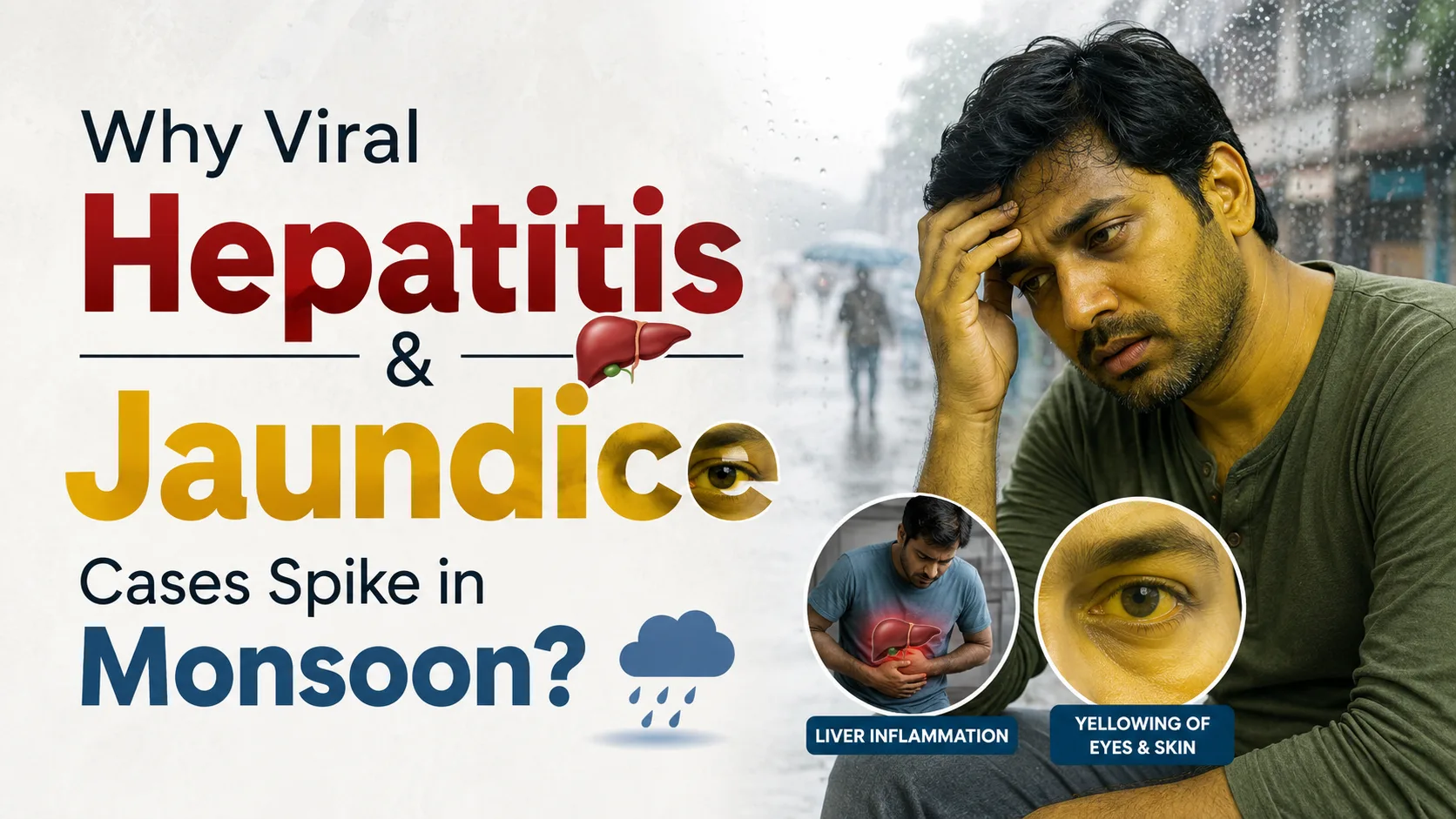
Why Do Viral Hepatitis & Jaundice Cases Spike During Monsoon?
Introduction
The arrival of monsoon brings welcome relief from the summer heat, but it also increases the risk of several infections. Among these, Viral Hepatitis in Monsoon is a significant health concern across India. Every year, hospitals witness a noticeable rise in patients suffering from hepatitis-related liver infections and Jaundice in Monsoon.
Contaminated water, poor sanitation, flooding, and increased exposure to food-borne infections create ideal conditions for the spread of hepatitis viruses. Understanding why Hepatitis in Monsoon becomes more common can help you take preventive measures and protect your liver health.
What Is Viral Hepatitis?
Viral hepatitis refers to inflammation of the liver caused by viruses. Several viruses can affect the liver, but during the monsoon season, Hepatitis A and Hepatitis E are the most common causes of acute viral hepatitis in India.
These viruses primarily spread through:
- Contaminated drinking water
- Improperly cooked food
- Poor hand hygiene
- Sewage contamination
- Street food prepared under unhygienic conditions
According to global health authorities such as the World Health Organization (WHO), Hepatitis A and E infections are closely associated with poor sanitation and unsafe water supplies.
Why Does Viral Hepatitis Increase During Monsoon?
1. Contaminated Water Sources
Heavy rainfall often leads to waterlogging and flooding. Sewage water can mix with drinking water pipelines, increasing the risk of viral contamination.
When individuals consume contaminated water, hepatitis viruses can enter the body and infect the liver.
2. Increased Consumption of Outside Food
Monsoon weather encourages many people to enjoy street foods and beverages. However, food prepared with contaminated water or under unhygienic conditions can transmit hepatitis viruses.
3. Poor Hygiene Practices
The rainy season often creates challenges in maintaining cleanliness. Inadequate handwashing before meals or after using the restroom increases the likelihood of infection.
4. Weakened Immunity and Seasonal Infections
Seasonal infections can place additional stress on the body’s immune system, making some individuals more susceptible to viral illnesses, including Viral Hepatitis in Monsoon.
What Is Jaundice?
Jaundice is not a disease itself but a symptom that occurs when bilirubin levels rise in the blood. It causes:
- Yellowing of the eyes
- Yellowing of the skin
- Dark urine
- Pale stools
Many cases of Jaundice in Monsoon are linked to viral hepatitis, particularly Hepatitis A and Hepatitis E.
When the liver becomes inflamed, it cannot efficiently process bilirubin, leading to jaundice.
Symptoms of Viral Hepatitis and Jaundice
Early recognition can help prevent complications.
Common symptoms include:
- Fatigue and weakness
- Fever
- Loss of appetite
- Nausea and vomiting
- Abdominal discomfort
- Dark-colored urine
- Yellow eyes and skin
- Itching
- Joint pain
If you notice these symptoms, seek medical evaluation promptly.
Who Is at Higher Risk?
Certain groups are more vulnerable to Hepatitis in Monsoon:
- Children and adolescents
- Elderly individuals
- Pregnant women
- People with existing liver disease
- Individuals with weakened immunity
- Frequent consumers of street food
- Travelers to areas with poor sanitation
Patients already suffering from chronic liver disease should be particularly cautious, as hepatitis infections may lead to more severe complications.
Read Also: Are you Hepatitis Free: Know the facts?
How Is Viral Hepatitis Diagnosed?
A gastroenterologist or hepatologist may recommend:
- Liver Function Tests (LFTs)
- Bilirubin levels
- Viral hepatitis markers
- Complete blood count
- Ultrasound abdomen (if required)
Early diagnosis helps ensure proper monitoring and recovery.
Dietary Tips During Viral Hepatitis
Nutrition plays an important role in recovery from Viral Hepatitis in Monsoon.
Foods to Include
- Freshly cooked home meals
- Soft rice and khichdi
- Oats and porridge
- Fresh fruits (washed thoroughly)
- Coconut water (from hygienic sources)
- Well-cooked vegetables
- Lean proteins such as dal, tofu, and paneer
- Adequate water intake
Foods to Avoid
- Street food
- Deep-fried foods
- Excessively spicy meals
- Packaged sugary drinks
- Alcohol
- Raw seafood
- Unpasteurized dairy products
Small, frequent meals are often easier to tolerate during recovery.
Prevention Tips for Monsoon
Preventing Jaundice in Monsoon and viral hepatitis is often easier than treating it.
Follow these precautions:
Drink Safe Water
- Consume filtered or boiled water.
- Avoid water from questionable sources.
Maintain Hand Hygiene
- Wash hands thoroughly before eating and after using the toilet.
Eat Fresh Food
- Prefer freshly prepared home-cooked meals.
- Avoid cut fruits sold in open areas.
Be Careful with Street Food
- Avoid food exposed to flies, dust, or stagnant water.
Consider Vaccination
- Hepatitis A vaccination may be recommended for eligible individuals after consulting a healthcare professional.
Meet Our Expert

Dr. Sukrit Singh Sethi
MBBS, MD (General Medicine), DM (Gastroenterology)
Senior Consultant & Director
Medical Gastroenterology, Hepatology & Liver Transplant Hepatology
Narayana Hospital, Gurgaon
Consulting at Gutwell, Sector 27, Gurgaon
When Should You Consult a Specialist?
Do not ignore symptoms such as yellow eyes, dark urine, persistent vomiting, or severe weakness.
Early consultation with a liver specialist can help prevent complications and ensure appropriate management.
If you are experiencing symptoms of Viral Hepatitis in Monsoon or Jaundice in Monsoon, consult Dr. Sukrit Singh Sethi, an experienced hepatologist and gastroenterologist associated with Narayana Hospital, Gurgaon and Gutwell, Sector 27 Gurgaon.
Final Thoughts
Monsoon-related infections remain a major cause of liver illness in India. The increase in Viral Hepatitis in Monsoon is largely linked to contaminated water, poor sanitation, and food-borne transmission. Since jaundice is often an early warning sign of liver inflammation, timely medical evaluation is essential.
By maintaining good hygiene, consuming safe food and water, and seeking expert medical care when symptoms arise, you can significantly reduce your risk of Hepatitis in Monsoon and protect your liver health throughout the rainy season.
Disclaimer: This article is intended for educational purposes only and should not replace professional medical advice, diagnosis, or treatment. Always consult a qualified healthcare professional for personalized medical guidance.